Procedure

Deep Plane Facelift

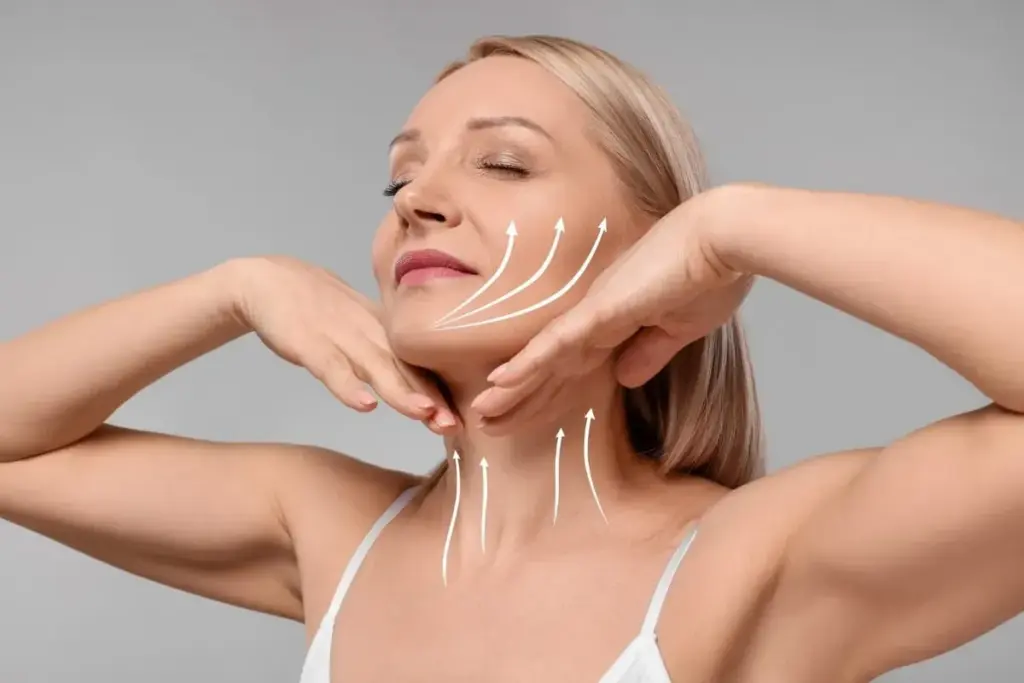
A deep plane facelift is an advanced facial plastic surgery technique. It lifts and repositions sagging facial tissues—including the SMAS muscle layer and fat pads—by releasing deep retaining ligaments. Unlike traditional methods that pull directly on the skin, it restores natural contours with less surface tension and longer-lasting results.
or send us a message or send us a WhatsApp message

  • 15 Years of Excellence
  • Award Winning Clinic
  • ★★★★★ — trusted by 2,017 clients

Benefits of Deep Plane Facelift

  • Natural look: Avoids the artificial "wind-tunnel" or tight appearance.
  • Longer lasting: Secures results at a deeper structural level.
  • Comprehensive: Treats the midface and neck more effectively
Deep Plane Facelift

At a glance

Surgery duration3 - 5 hours
Result lasts15 years
Follow-upIncluded
Hospital stay2 days
Drive10 - 15 days
Shower4 - 5 days
Sport3-4 weeks
Sexual activity3-4 weeks

How does Deep Plane Facelift work

  • Releases ligaments: Frees the facial tissues tethered to the bone.
  • Lifts as a unit: Moves skin, fat pads, and muscles together.
  • Reduces skin tension: Drapes skin naturally without a stretched look.
  • Targets midface: Restores fullness to the cheeks and softens deep lines.
  • Refines jawline: Smooths jowls and tightens the neck

Your consultation

Begin with a personal consultation

Discuss your goals, concerns and the right approach for you with an experienced surgeon. Your consultation includes a detailed assessment, clear guidance and time to answer every question.

Request a consultation

Consultation at Aurelia Clinic

Patient Journey

Consultation

1. Discussion of Your Goals

  • Your concerns: You explain what bothers you most, such as sagging jowls or a loose neck.
  • Medical history: The surgeon reviews your health, allergies, and past procedures.
  • Lifestyle check: You discuss habits like smoking, which significantly affects healing.

2. Clinical Evaluation

  • Skin quality: The surgeon checks your skin's elasticity and texture.
  • Deep structures: They assess the position of your facial muscles and fat pads.
  • Photography: Medical photos are taken from multiple angles to analyze your features.

3. Surgical Plan and Strategy

  • Incision placement: The doctor shows where scars will be hidden along the hairline and ears.
  • Combined procedures: They may suggest extra steps, like an eyelid lift or fat grafting.
  • Risk discussion: You receive a transparent breakdown of potential complications and safety steps.

4. Logistics and Cost

  • Financial quote: You get a detailed price breakdown including surgical, clinic, and anesthesia fees.
  • Recovery timeline: The team explains how much time you need to take off from work and exercis

Preparation

4 to 6 Weeks Before Surgery

  • Stop all nicotine: You must completely quit smoking, vaping, or using nicotine patches. Nicotine shrinks blood vessels, which can severely damage how your skin flaps heal.
  • Request time off: Plan to take at least 2 to 3 weeks off from work and social obligations.
  • Arrange a helper: Secure a responsible adult to drive you home from the hospital and stay with you for at least the first 24 to 48 hours.

2 Weeks Before Surgery

  • Avoid blood thinners: Stop taking aspirin, ibuprofen (Advil, Motrin), and high-dose vitamin E or fish oil supplements. These can cause excessive bleeding and bruising.
  • Cut out alcohol: Stop drinking alcohol entirely. Alcohol can dehydrate your body and increase surgical swelling.
  • Prep soft foods: Buy or make easy-to-reheat, soft meals like soups, smoothies, and protein shakes. Your jaw will feel tight, making hard foods difficult to chew for the first few days.

1 Week Before Surgery

  • Fill your prescriptions: Pick up your prescribed pain medications, antibiotics, and anti-nausea pills ahead of time so they are ready at home.
  • Set up a recovery nest: Prepare an area with a reclining chair or plenty of extra pillows. You will need to sleep with your head elevated for a couple of weeks to reduce swelling.
  • Buy front-opening clothes: Gather button-down or zip-up shirts. You cannot pull clothing over your head after surgery to avoid pulling on your incisions.

The Day Before & Morning of Surgery

  • Wash your hair: Take a thorough shower and wash your hair with antibacterial soap if recommended by your clinic. You will not be allowed to wash your hair for several days after the procedure.
  • Follow fasting rules: Do not eat or drink anything after midnight, or follow the specific fasting window provided by your surgical center.
  • Arrive barefaced: Do not apply any makeup, lotions, or hair products on the morning of your surgery. Leave all jewelry at home.

Surgery details

A deep plane facelift surgery is a highly precise procedure that typically takes 3 to 5 hours to complete. It is performed as an outpatient surgery or requires a one-night hospital stay, depending on your surgeon's recommendation.

Here are the specific details of what happens on the day of the procedure:

1. Anesthesia and Comfort

  • General anesthesia: You are completely asleep and monitored by an anesthesiologist throughout the entire process.
  • Local numbing: The surgeon also injects a numbing fluid into your face to prevent pain and minimize bleeding during the operation.

2. The Incisions

  • Carefully hidden: The incisions begin in the hairline at the temples, travel down in a natural crease just in front of the ear, wrap around the earlobe, and extend into the lower scalp.
  • Under the chin: A small, separate incision is often made under the chin to allow the surgeon direct access to the neck muscles.

3. Entering the "Deep Plane"

  • Lifting the SMAS: The surgeon lifts the outer skin and the SMAS layer (the muscle-and-fat sheet under the skin) together as one thick unit.
  • Releasing the tethers: The surgeon safely cuts the strong retaining ligaments that hold your facial tissue tightly to the cheek and jawbones.
  • The repositioning: Once these ligaments are freed, the heavy, sagging fat pads of the cheeks and jowls can be lifted vertically into a higher, more youthful position.

4. Muscle Tightening (The Neck)

  • Platysmaplasty: Through the chin incision, the surgeon pulls the loose edges of your neck muscle (the platysma) together and sews them like a corset to create a sharp, firm jawline.

5. Closure and Bandages

  • Trimming excess skin: Because the deeper tissues are moved up, the skin naturally drapes over the new contours without being pulled. The small amount of leftover skin at the edges is gently trimmed away.
  • Stitches and drains: The incisions are closed using tiny, precise stitches or staples. Small silicone tubes (drains) are often placed under the skin behind the ears for 24 hours to collect excess fluid.
  • The wrap: Your head and neck are wrapped in a supportive, fluffy cotton dressing to control swelling.

Downtime & Recovery

Week 1: Total Rest (The Peak Downtime)

  • Appearance: Your face will look very swollen, and you will have significant bruising. Swelling peaks between day 3 and day 5.
  • Feeling: Your jaw and neck will feel tight and stiff, and your skin will feel numb.
  • Social life: You will want to stay hidden at home during this time.

Week 2: Noticeable Improvement

  • Appearance: Bruises fade from purple to yellow and move down your neck. Swelling drops by about half.
  • Feeling: Your stitches are removed by your doctor, and your jaw stiffness begins to ease up.
  • Social life: By day 12 to 14, you can apply camouflage makeup to hide any leftover bruising and go out for short errands.

Week 3: Return to Work & Public Life

  • Appearance: To strangers, your face will look completely normal. Friends or family might still notice a very subtle, minor puffiness.
  • Activity: This is when most patients feel confident returning to a desk job and resuming their normal social activities.

1 Month and Beyond: The Final Settling

  • At 6 Weeks: About 90% of the swelling is gone. You can safely attend major events like weddings or take professional photos.
  • 3 to 6 Months: Your skin's natural sensation slowly wakes up, and any firm or "wooden" areas beneath the skin soften up.
  • At 1 Year: Your incisions fade into thin, white lines. This is when you see your final, permanent result.

Aftercare

Aftercare for a deep plane facelift requires careful attention to protect your healing tissues and minimize swelling. Recovery happens in phases over several weeks.

Here is your daily guide to a smooth recovery:

The First 48 Hours (Critical Phase)

  • Keep your head elevated: Sleep on your back with 2 or 3 pillows to prop your head up. This actively controls the intense initial swelling.
  • Leave the bandage alone: Keep the large compression wrap on your head until your surgeon removes it at your first follow-up.
  • Take pain meds on schedule: Take your prescribed pain medication at regular intervals. Do not wait for the pain to become severe before taking them.
  • Stick to very soft foods: Eat items like smoothies, soups, or mashed potatoes. Your jaw will feel too stiff to chew hard food.

Days 3 to 14 (Initial Healing)

  • Stitch removal: The surgeon will remove your stitches and staples between day 5 and day 10.
  • Gentle hair washing: Once your doctor gives the green light (usually around day 3 to 5), wash your hair very gently with lukewarm water and mild shampoo.
  • Apply cold compresses: Place ice packs wrapped in a clean cloth on your cheeks and neck to soothe swelling. Never put ice directly on your bare skin, as your skin is numb and can get freezer burned.
  • Light walking: Walk around your house for a few minutes every hour to keep your blood flowing and prevent blood clots. Avoid any lifting or bending over.

Weeks 3 to 6 (Returning to Normal)

  • Camouflage makeup: You can apply makeup to hide any leftover bruising once your incisions are completely closed and dry (usually around day 12 to 14).
  • Scar massages: Your surgeon will show you how to gently massage your scars to soften the tissue and help your nerves wake up.
  • Light exercise: You can start light activities like brisk walking after 3 to 4 weeks. Avoid heavy workouts, running, or swimming until at least 6 weeks post-surgery.

Long-Term Golden Rules

  • Absolute sun protection: Apply SPF 50 sunscreen to your scars every single day for at least one year. Direct sunlight can permanently darken healing scars.
  • Keep avoiding nicotine & alcohol: Do not smoke or drink alcohol during the first month, as both slow down cellular repair and prolong swelling.

Follow-up

1. Day 1 After Surgery (The First Check)

  • Goal: To verify the immediate safety and health of your facial tissues.
  • What happens: The surgeon or nurse removes the heavy compression wrap. They check your face for any sudden bleeding or blood collection (hematoma). If you have small surgical drainage tubes, they are usually taken out during this visit.

2. Days 5 to 7 (First Stitch Removal)

  • Goal: To start freeing the incisions where the skin heals the fastest.
  • What happens: The doctor removes the delicate stitches located directly in front of your ears. They will check to ensure your incision lines remain clean and dry.

3. Days 10 to 14 (Final Stitch Removal)

  • Goal: To completely clear all remaining closures.
  • What happens: All leftover stitches and any tiny surgical staples hidden in your hair (at the temples and behind the ears) are removed. The surgeon evaluates your bruising and usually gives you the green light to drive and wear makeup.

4. 1 Month Post-Op

  • Goal: To assess early tissue settling and swelling reduction.
  • What happens: The doctor checks the flexibility of your facial skin as the heaviest puffiness subsides. They will show you how to perform gentle scar massages to soften any firm areas and help your numb skin wake up.

5. 3 Months & 6 Months Post-Op

  • Goal: To monitor natural structural changes and nerve recovery.
  • What happens: The medical team takes new progress photos to compare with your pre-surgery baseline. The surgeon checks that feeling is slowly returning to your cheeks and ears, which is a gradual process.

6. 1 Year Post-Op (The Final Review)

  • Goal: To officially evaluate your final, long-term outcome.
  • What happens: Your scars have fully matured into thin, faint lines. The surgeon takes your official "after" photos to wrap up your care protocol, celebrating your lasting and natural results.

Patient results

View Before & After Results

Explore real patient outcomes and see the considered results achieved across our treatments and procedures.

View photo gallery
Deep Plane Facelift before and after result 1Deep Plane Facelift before and after result 2

Contraindications

1. Absolute Medical Contraindications

  • Nicotine users: People who smoke, vape, or use nicotine patches. Nicotine shrinks blood vessels, which severely cuts off blood flow and causes skin tissue death (necrosis).
  • Severe or uncontrolled illnesses: Anyone with uncontrolled high blood pressure (which causes severe internal bleeding), unmanaged diabetes, active cancer, or severe heart disease.
  • Bleeding disorders: Patients taking permanent blood thinners that cannot be safely paused, or those with blood-clotting diseases.
  • Pregnancy: Women who are currently pregnant or breastfeeding.

2. Unsuitable Facial Anatomy & History

  • Extensive non-surgical treatments: Individuals who have had multiple thread lifts, high-heat skin tightening (like Ultherapy), or biostimulating fillers (like Sculptra or Radiesse). These create dense internal scarring (fibrosis) that prevents a surgeon from safely navigating the delicate deep plane layer where crucial facial nerves live. [1, 2, 3]
  • Naturally thin or fragile tissues: If the deep muscle sheet (the SMAS layer) is genetically too thin or tearing easily, it cannot support the heavy stitches needed to lift the face.
  • Multiple previous facelifts: Patients who have already had several lifts may have too much scar tissue or compromised blood vessels in the face.
  • Prior heavy facial trauma or radiation: Anyone who has had radiation therapy to the face or head, or a history of severe deep facial infections.

3. Lifestyle and Aesthetic Factors

  • Active weight loss: People currently in the middle of losing significant weight. It is best to wait until weight is completely stable for at least 6 months so the surgeon lifts the correct amount of tissue.
  • Minimal signs of aging: Younger patients or individuals who only have minor skin wrinkles. This complex surgery is meant for moderate to severe sagging. Lesser issues are better treated with non-surgical options or a mini-lift.
  • Unrealistic expectations: Individuals expecting a surgery to completely change their facial identity, or those experiencing Body Dysmorphic Disorder (BDD)

Risks and side effects

Like any surgical procedure, a deep plane facelift carries common side effects that are part of the normal healing process, as well as rare but serious medical risks. Because this surgery operates beneath the deep muscle layer where major facial nerves live, choosing a highly experienced surgeon is critical to minimizing these dangers.

Here is a breakdown of what to expect, from routine side effects to potential surgical complications.

Expected Side Effects (Normal Healing)

These occur in almost all patients and fade over time:

  • Numbness: Sensory nerves are temporarily disrupted. Your cheeks, ears, and neck will feel numb for 3 to 6 months while the microscopic nerve fibers grow back.
  • Swelling and Bruising: Swelling usually peaks around day 3 and mostly resolves within 2 to 3 weeks, though minor residual tightness can linger for months.
  • Tightness: Your jaw and neck will feel stiff and tight, making it slightly uncomfortable to yawn or chew hard food for the first few weeks.
  • Temporary Hair Thinning: You may experience slight hair shedding around the incisions in the scalp, but this typically grows back within 6 months

Deep Plane Facelift
at Aurelia Clinic

Aurelia Clinic ManchesterAurelia Clinic London

Deep Plane Facelift £17,000

Deep Plane Facelift + Neck Lift £21,000

Request a consultation

or send us a message or send us a WhatsApp message

Finance available
Who performs Deep Plane Facelift

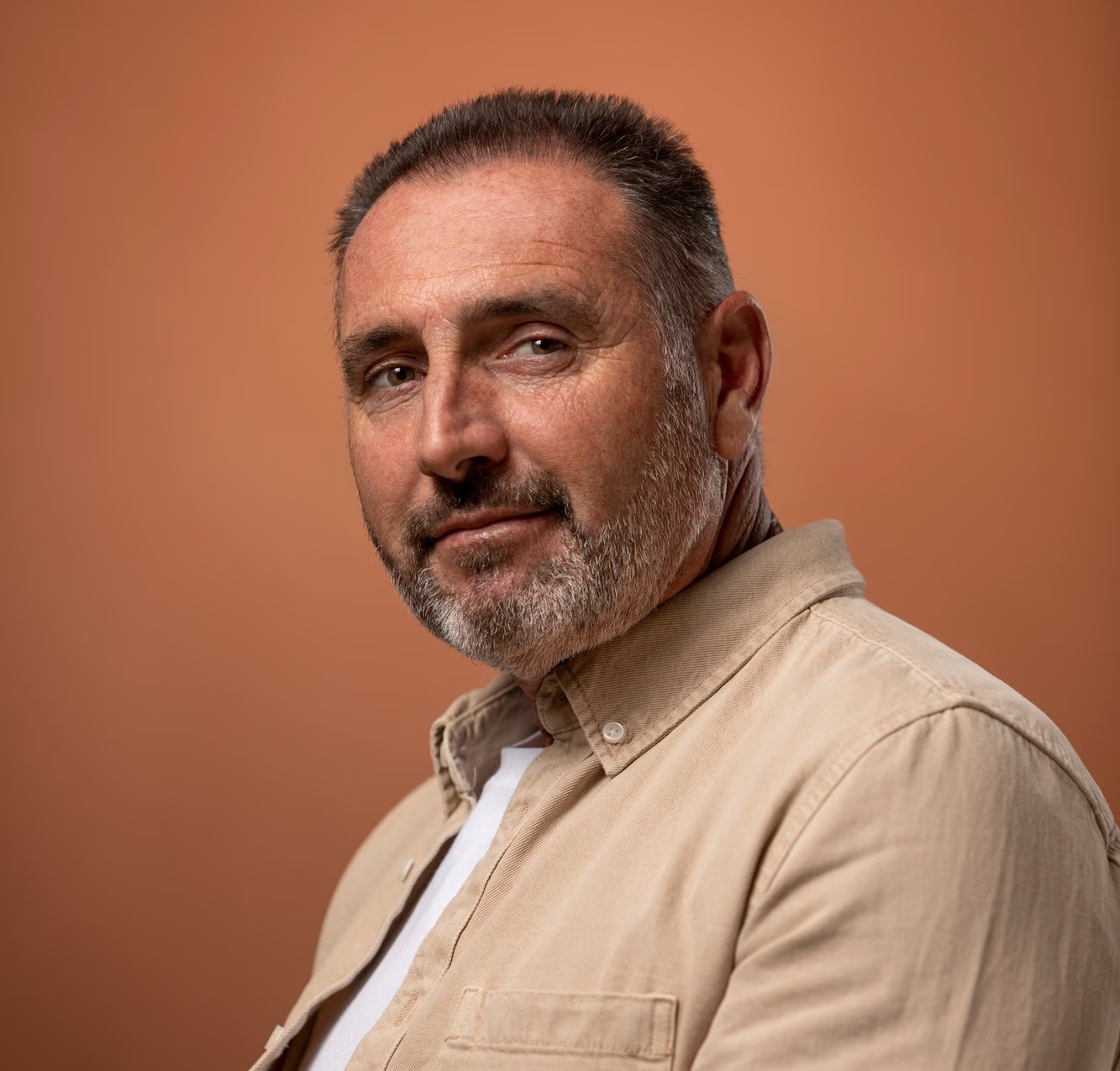
Nicolas Gregson

Dr Nicolas Gregson

Plastic Surgeon

MBBS

Dr Nicolas Gregson is a plastic surgeon providing personalised consultation and treatment planning for patients considering aesthetic and reconstructive procedures. Dr Gregson’s clinical interests include facial surgery, body contouring, breast surgery, and other personalised aesthetic procedures.

GMC · 123456

Aurelia Clinic London · Aurelia Clinic Manchester

View full profile

Frequently asked questions

It typically lasts 10 to 15 years. Why it lasts: Because surgeons lift the deep, heavy muscle layer and secure it with strong stitches, the results are much more durable than traditional facelifts that only pull on the skin.

Most patients are between 45 and 65 years old. The criteria: Age matters less than your facial anatomy. You are a good candidate if you have significant sagging in your cheeks, deep lines around your mouth, and loose skin along your jawline or neck.

No, this technique creates a very natural, refreshed look. Traditional lifts pull the skin horizontally, which can cause a tight "wind-tunnel" appearance. The deep plane facelift moves the deep muscles vertically back to where they used to be, leaving the skin completely tension-free.

No, the scars are highly camouflaged and hidden. Incisions run inside the natural curves around your ear, behind the ear lobe, and up into your hairline. Once healed after a few months, they become thin, faint white lines that are very hard to see.

Most patients describe it as uncomfortable and tight, rather than highly painful. You will feel a strong sensation of pressure and stiffness in your jaw and neck for the first week. True surgical pain is easily managed with the prescription medications your doctor provides for the first few days.

Yes, it is very common to combine it with other surgeries. Many patients choose to add an eyelid lift (blepharoplasty), a brow lift, or fat grafting (moving fat from your stomach to your face) to restore youthful volume to hollow eyes and lips.

It generally ranges from £17,000  

Visit or contact the clinic

Use this area for a short, practical introduction to the clinic and the easiest ways to get in touch.

Phone
000 125 46 78
WhatsApp
32000000000
Email
hello@clinic.com
Address
123 Clinic Street, City
Show on map ↗

Opening hours

Monday
09:00–18:00
Tuesday
09:00–18:00
Wednesday
09:00–18:00
Thursday
09:00–18:00
Friday
09:00–18:00
Saturday
09:00–18:00
Sunday
Closed

Parking

Free parking available

Follow the clinic

Contact Us

We will get back to you within 24 hours.

Email or phone

Please provide at least one of these.

Do not include sensitive personally identifiable information (PII) or protected health information (PHI) in your message. This form is for general enquiries only.

Award or recognition 1
Professional association 1Professional association 2Professional association 3Professional association 4